A contribution by Caminhos do Oeste’s Miguel Sendim
The city of Caldas da Rainha stands out among Portuguese municipalities for its remarkable culture of promoting sports and physical activity. At a time when sedentary lifestyles still dominate in much of our post-industrial society, this ordinary city in the western region of Portugal has become a national benchmark for encouraging its residents to engage in regular physical exercise. Data collected by the local government shows that approximately 44% of the population actively participates in structured sports activities, whether through federated sports, gyms, fitness academies, informal clubs, or community groups that gather in the city’s many high-quality public spaces. This figure is nearly double the national average, which, according to the most recent Eurobarometer, stands at around 25%. This collective commitment to physical well-being is reflected not only in the high participation rates but also in the quality of public infrastructure, the variety of municipal programs, and the involvement of local organizations. The city understands that “Sport is Health,” and it has offered concrete proof of this belief.
After age 40, physical activity becomes increasingly crucial for health. In 2018, over 95% of deaths in Portugal were disease-related, with about a third linked to lifestyle factors like inactivity. The WHO highlights exercise as key in preventing heart disease, diabetes, cancer, and in improving mental health. Adults should aim for 150–300 minutes of moderate aerobic activity weekly, while children need at least 60 minutes daily. Incorporating movement into daily life and reducing sedentary time are essential. The Exercise is Medicine® initiative urges doctors to treat physical activity as a vital part of any treatment plan.
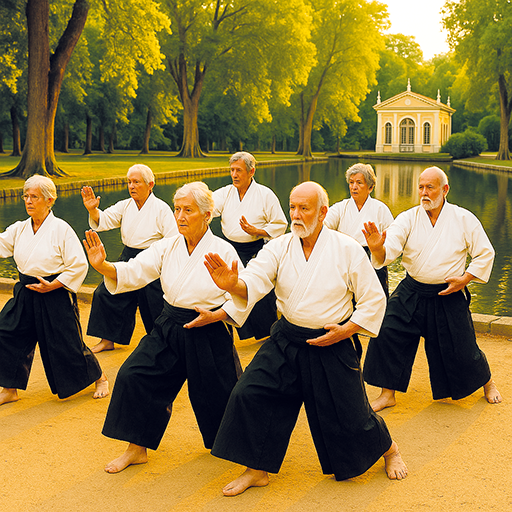
It is within this dynamic context that the Nishi no Michi project was born in Caldas da Rainha. More than just a practitioners’ club, it is a holistic initiative aimed at promoting a healthy lifestyle. Founded on WHO principles, the project focuses on several pillars: proper nutrition, adequate physical activity, mental health, quality sleep, risk prevention, and self-care. Nishi no Michi regularly offers Aikido and self-defense classes led by the French master Michel Martin, a 7th dan black belt, and coordinates the “Balance and Movement” program, which focuses on fall prevention and body awareness. This program operates under the supervision of the Portuguese Institute of Sport and Youth and is part of the National Sports for All Program. Developed by a multidisciplinary team, it hosts regular activities at the Sociedade Columbófila Caldense and the city’s Senior University, maintaining an active presence in municipal health and sports events.
Through the association Caminhos do Oeste, which it helped establish, the project also collaborates with various professionals in complementary fields such as Taichichuan, Yoga, and Circus Arts. These collaborations are both regular and event-based, reflecting a holistic and inclusive approach. The annual schedule includes participation in events like the Festival of the Lagoon, the South African Market, and the European Week of Sport. In 2025, Nishi no Michi will also join the “Falo Mexer” event, a celebration of health and mobility across all age groups. Nishi no Michi embraces its responsibility towards the public good with offerings in training and education. In partnership with the Portuguese Aikido Federation, it contributes to the “Aikido and Healthy Aging” program and offers workshops focused on health literacy, empowering the public with knowledge to improve well-being.
Looking ahead, the club is organizing the National Aikido 60+ Gathering on June 21, which will bring together experts for training sessions in strength and mobility (led by calisthenics specialist Alexis Giuntini), senior sports nutrition (by nutritionist Dra. Helena Lopes), and fall prevention (by Miguel Sendim), among other events of broad community interest.
Ultimately, the success of Caldas da Rainha’s sports policy lies in the diversity of its offerings, the active engagement of its citizens, and a clear vision that sees sport not merely as a recreational activity, but as an ongoing investment in public health. While many municipalities still struggle to foster inclusive sports environments, Caldas da Rainha continues to lead by example—a model city where physical activity is a right available to all, regardless of age, physical condition, or socioeconomic status. With its clubs, sports facilities, regular events, and strong sense of community, the city continues to demonstrate that sports for all is not a distant dream, but a living reality being built every day.